
Will Your Child Get
Too Bulky?
20th January 2020
Seaton Humphreys
I know when my brothers and I started resistance training there used to be an echo from everywhere we were; “don’t lift that too much it’ll”, “make you too big”; “slow you down” or my favourite, “stunt your growth”. That echo always came from my mother (generally from the kitchen as she prepared meals for myself, brothers and Dad), and to avoid that echo we generally tried to stay out of site whilst lifting. By lifting, we had what could only be described as scrap parts that were heavy enough to elicit adequate resistance to cause a pump. We had a long axel rod about 3 inches in diameter, used for cross-bracing gates, weighing in at a max 8kgs and some spare car rims, which would have been under 10kg’s each. Now given that my brother and I were very keen on mountain biking we performed several row variations, pushes, and pulls that were somewhat of a mimicry of what we experienced on a bike. In addition to destroying our forearms with stupid amounts of flexions and extensions to try and rid ourselves of the phenomenon called “arm-pump” (not to much avail). It probably wasn’t the worst thing we could have done, but certainly not the best. Despite the relatively low resistance, my Mother always felt it her duty to ensure we heard the warnings, as I’m sure many a child hears currently with their parents not having the information required to ensure resistance training is performed safely and conducted appropriately to elicit preferable adaptations to their work.
Although my brothers and I only had access to low resistance tools, with the fitness boom, weights have become easily accessible. So, let’s discuss what resistance training may do regarding making your child “too bulky”.
This is multi-factorial (as with anything with kids), however we can probably say with safety this can be broken into 2 parts. Pre-puberty children (not yet developed secondary sex characteristics), who are generally girls up to 11 and boys up to 13, and Adolescents, those going through or are past puberty.
Pre-Puberty
These young ones haven’t yet hit their stride. Hormonal changes haven’t taken place and are somewhat as innocent in the gym as they are still in their parent’s minds (6, 8). In saying that, room for improvements and benefits seen from resistance training are certainly still observed in this demographic via;
- Central Nervous System adaptation (upgrading their ability to control and contract their muscles, as well as strength benefits through contractile properties) (5, 6)
- Flexibility (their structural limitation to getting into the end range position)
- Mobility (the ease at which they get into the end range position)
- Proprioception (their ability not to bang into walls) (5, 6)
- Confidence &
- Identification of their own strength and power potentials
In saying all of that, without the hormonal upregulation, generally lean muscle mass in this age population is hard to come by, so no, mini Hercules will be hard to find in this demographic.
Puberty Onset
Once your child reaches puberty everything changes, with hormones going crazy the body is primed to start to build muscle and take on a new shape. This is generally where parents become apprehensive regarding “too bulky”, as they have the capacity to do so. In saying that, you may all not be apprehensive about the same type of “bulky” as there are two types:
- They can put on lean muscle mass
- They can put on seldomly un-wanted fat mass.
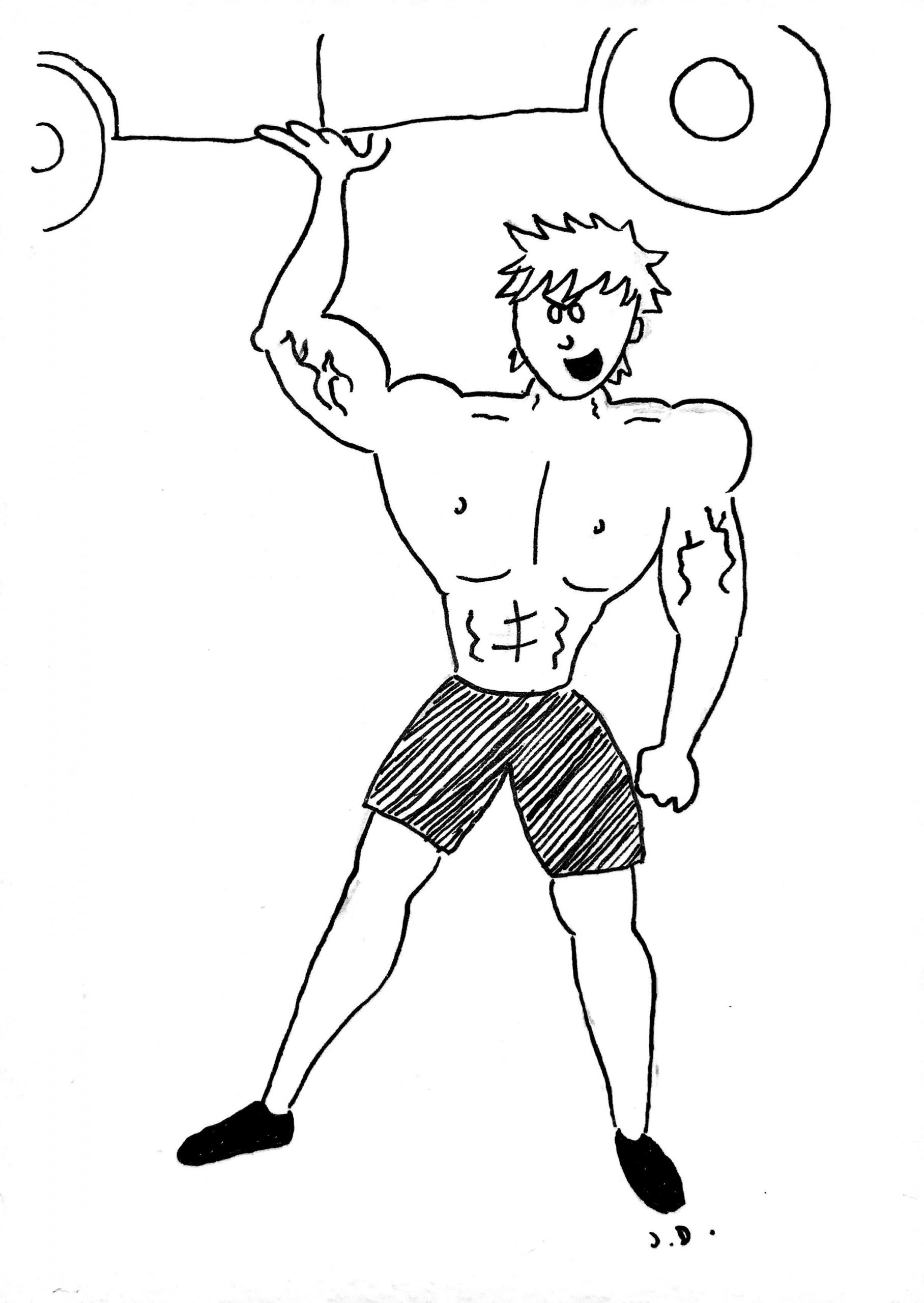

If you are a parent concerned about your son or daughter putting on muscle (and I am aware of the different psycho-social aspects for boys and girls), I would have it a guess, it isn’t that you are concerned directly with putting on muscle, but the indirect consequences of doing so:
- Become inflexible or Stiff – This can generally be accommodated for by implementing a well-rounded program – I will elaborate on this topic in further blogs.
- Power to Weight Ratio – After your child has gone through a rapid growth spurt, following that they’ll go through a period of rapid weight gain. Resistance training can off-set the inherent sway of power to weight redistribution from growth rates (2)
- This one’s a little tongue in cheek, though I’m sure some parents have thought about it (as it is a thing) Have to buy new clothes – make them get a job (have some accountability.
- Over-use injuries from being heavier? – Same as the power to weight being able to assist in accommodating their new body, resistance training can off-set the strength requirements with the new weight. Adolescent injuries are often overload (or chronic) injuries, therefore preventative strategies would be directed at strengthening both their soft tissue (muscles, tendons, ligaments) and exposing their bones to a progressive stimulus (plyometrics; high amplitude and low amplitude (4)). I elaborate on this topic about overuse injuries in future blogs. (1, 3)
- Now I may be putting my hand in a beehive here, but I have a sneaky suspicion that although never communicated, this could play a part for why some parents are reluctant (or not as enthusiastic) about resistance training. The realisation that they’re growing up – Everyone hates change, however there is another side of the coin; they can help you carry more groceries.
The 2nd concern about starting resistance training; becoming “too bulky” by the true definition, adding on additional fat mass. Everyone has a different capacity for putting on muscle, how strong they can get, and how their body does so. Ectomorph, mesomorph, endomorph type stuff. Everyone has their predisposition of body type and no matter how hard they wish some attributes won’t change. So, for the 2nd concern about your son or daughter becoming “too bulky” in regards to adding fat mass here are some of the discussion points;
- Increasing physical activity, increases your required calories in
- Lifting weights will increase your satiation. Where aerobic conditioning suppresses your appetite, resistance training does the opposite (7). Your child will want to gorge themselves on food, with the type of training; both remodelling of soft tissues and taxing training on the Central Nervous system (CNS), their body (and mind) will crave simple sugars. Now I’m not a dietician, but if you are concerned about putting on unwanted size, you’ll need to ensure simple sugars are still managed as resistance training doesn’t give you the hall pass to gorge.
- Given they will increase their lean muscle mass, their basal metabolic rate will increase, so you do need to ensure they’re eating enough to be in a position to fuel their physical activity increase, in addition to maintaining a surplus of energy to actually take advantage of their training so they can adapt (build muscles etc). (2, 7).
Hopefully that has alleviated some of your concerns and provided a bit of information about your child becoming “Too Bulky” by starting resistance training. Although my Mother had her worries, I haven’t ever heard her complain or glean with a smile about raising 3 healthy boys who have more size to hug her with.
References
- Bass, S. L. (2000). The prepubertal years. Sports Medicine, 30(2), 73-78.
- Faigenbaum, A. D., Kraemer, W. J., Blimkie, C. J., Jeffreys, I., Micheli, L. J., Nitka, M., & Rowland, T. W. (2009). Youth resistance training: updated position statement paper from the national strength and conditioning association. The Journal of Strength & Conditioning Research, 23, S60-S79.
- Hind, K., & Burrows, M. (2007). Weight-bearing exercise and bone mineral accrual in children and adolescents: a review of controlled trials. Bone, 40(1), 14-27.
- MacKelvie, K. J., Petit, M. A., Khan, K. M., Beck, T. J., & McKay, H. A. (2004). Bone mass and structure are enhanced following a 2-year randomized controlled trial of exercise in prepubertal boys. Bone, 34(4), 755-764.
- Ozmun, J. C., Mikesky, A. E., & Surburg, P. R. (1994). Neuromuscular adaptations following prepubescent strength training. Medicine and science in sports and exercise, 26(4), 510-514.
- Ramsay, J. A., Blimkie, C. J., Smith, K. A. R. E. N., Garner, S. C. O. T. T., MacDougall, J. D., & Sale, D. G. (1990). Strength training effects in prepubescent boys. Medicine and science in sports and exercise, 22(5), 605-614.
- Rowland, T. W. (2005). Children’s exercise physiology (pp. 67-133). Champaign, IL: Human Kinetics.
- Vrijens, J. (1978). Muscle strength development in the pre-and post-pubescent age. In Pediatric work physiology (Vol. 11, pp. 152-158). Karger Publishers.